
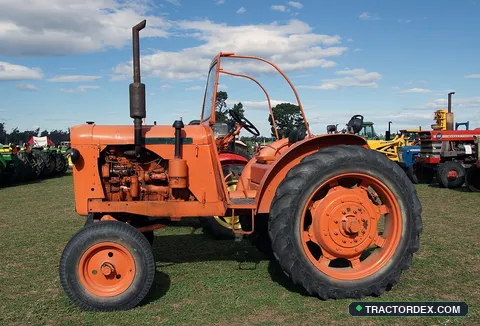
Chamberlain Canelander
Traduction française indisponible ; contenu anglais affiché.
Années de production: 1959–1973
Sources et preuves par champ
Cette fiche importée ne contient pas encore de preuves au niveau des champs.
Ask TractorDex AI Copilot About Canelander
Instant technical consultation powered by heavy machinery knowledge
Engineering & Capability Benchmark
Specific output, tractive ratio, and segment percentile
Caractéristiques du moteur et de la puissance
- Modèle du moteur
- Perkins 4-270D
- Carburant
- Diesel
- Puissance nominale
- 62 hp
- Rated PTO Power
- 55 hp (Chamberlain specification)
- Drawbar Power @ Rated Engine Speed
- 48 hp (Nebraska OECD Test 2218)
- Cylindres
- 4
- Cylindrée
- 4.4 L (270 ci)
- Alésage / course
- 4.25x4.75 inches 108 x 121 mm
- Régime nominal
- 2000 RPM
- Capacité d’huile moteur
- N/A
- Capacité de liquide de refroidissement
- N/A
Maintenance picks for the Canelander
Filters, oil and common wear parts for this model.
Caractéristiques de transmission et de châssis
- Type de transmission
- Gear (9F/6R)
- Rapports (avant / arrière)
- 9 avant / 6 arrière
- Système d’entraînement
- 2WD
- Empattement
- 92 in
- Pneu avant
- 7.50x18
- Pneu arrière
- 14.9x38
- Débit hydraulique
- N/A
- Attelage arrière
- II
Implement Draft & Ballast Matcher
Simulate draft resistance, drawbar power transfer, and optimal axle weight distribution for Chamberlain Canelander.
Engine demand (83.4 HP) exceeds rated power (62 HP). Reduce working speed by 1.0-1.5 mph or reduce working width.
Instant Used Market Valuation Projector
Algorithmic resale estimate for Chamberlain Canelander (1959)
Direct Segment Rivals & Showdowns
Head-to-head match-ups calibrated by horsepower and era
Looking for a used Chamberlain Canelander?
Browse live listings and auction results near you.
Comparer des machines similaires
Chamberlain
Australia • 26 Models
Chamberlain is an Australian agricultural machinery brand with roots tracing back to Welshpool, Western Australia, where it was established in an old armament factory. The brand initially gained recognition for its robust and reliable tractors designed to meet the demanding needs of the Australian agricultural sector. Chamberlain's early success was marked by its ability to produce machinery that could withstand the harsh conditions of the Australian outback. In 1970, the brand caught the attention of Deere & Company, which initiated an acquisition process. This strategic move by Deere led to the integration of John Deere engines into some Chamberlain models, signifying a significant technological advancement for the brand. The influence of John Deere became even more pronounced in 1975 with the launch of the 'Sedan 80' series, which bore design elements inspired by its American counterpart. By 1985, Chamberlain tractors were being painted in the iconic John Deere green, although they retained the Chamberlain name. However, this collaboration was short-lived, as Deere ceased tractor production at the Welshpool factory in 1986. The company then shifted to importing Deere tractors from other factories, marking the beginning of the end for Chamberlain's independent manufacturing operations. Chamberlain's legacy is characterized by its contribution to the development of durable and efficient tractors tailored to the unique challenges of Australian farming.
View Full Chamberlain Lineup