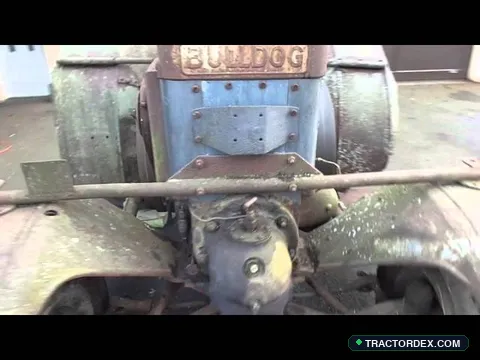
Lanz HR6
Traduction française indisponible ; contenu anglais affiché.
Années de production: 1929–1935
Sources et preuves par champ
Cette fiche importée ne contient pas encore de preuves au niveau des champs.
Ask TractorDex AI Copilot About HR6
Instant technical consultation powered by heavy machinery knowledge
Engineering & Capability Benchmark
Specific output, tractive ratio, and segment percentile
Caractéristiques du moteur et de la puissance
- Modèle du moteur
- Lanz
- Carburant
- Unknown
- Puissance nominale
- 38 hp
- Rated PTO Power
- N/A (Lanz specification)
- Cylindres
- 1
- Cylindrée
- 10.3 L (628.5 ci)
- Alésage / course
- 8.858x10.24 inches 225 x 260 mm
- Régime nominal
- 630 RPM
- Capacité d’huile moteur
- N/A
- Capacité de liquide de refroidissement
- N/A
Maintenance picks for the HR6
Filters, oil and common wear parts for this model.
Caractéristiques de transmission et de châssis
- Type de transmission
- N/A
- Rapports (avant / arrière)
- 3 avant / 1 arrière
- Système d’entraînement
- Unknown
- Empattement
- N/A
- Pneu avant
- N/A
- Pneu arrière
- N/A
- Débit hydraulique
- N/A
- Attelage arrière
- N/A
Implement Draft & Ballast Matcher
Simulate draft resistance, drawbar power transfer, and optimal axle weight distribution for Lanz HR6.
Ballast distribution and traction efficiency depend directly on chassis drive type. Please select your tractor's configuration:
Engine demand (83.4 HP) exceeds rated power (38 HP). Reduce working speed by 1.0-1.5 mph or reduce working width.
Instant Used Market Valuation Projector
Algorithmic resale estimate for Lanz HR6 (1929)
Direct Segment Rivals & Showdowns
Head-to-head match-ups calibrated by horsepower and era
Looking for a used Lanz HR6?
Browse live listings and auction results near you.
Comparer des machines similaires
Lanz
Germany • 71 Models
Lanz is a storied German tractor manufacturer with roots tracing back to the early 20th century. Founded in 1900 by Dr. Heinrich Lanz in Mannheim, Germany, the company initially focused on steam engines and motor cultivators before achieving its most significant breakthrough with the introduction of the Lanz Bulldog in 1921. The Bulldog, a simple yet robust tractor, became an icon of agricultural engineering and was produced in large numbers, with nearly a quarter-million units built over three decades. The tractor's distinctive features, including its hot-bulb engine and straightforward design, made it a favorite among farmers for its reliability and ease of maintenance. In 1956, Lanz was acquired by the American tractor giant John Deere, marking a pivotal moment in the company's history. Following the acquisition, the Lanz Bulldog continued to be produced but was gradually integrated into John Deere's product lineup, adopting the iconic green color and Deere branding by 1958. By the late 1960s, the Lanz name had faded from the market, though the Mannheim factory remained operational under John Deere's ownership. This acquisition allowed John Deere to strengthen its presence in Europe and incorporate Lanz's engineering expertise into its global operations.
View Full Lanz Lineup