
Sources and field evidence
Catalog Archive: Baseline specifications compiled from historical manufacturer archives and equipment registries. Laboratory test report verification in progress.
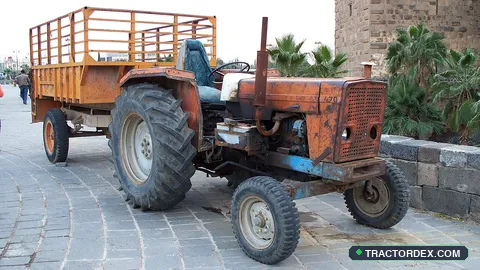
Ask TractorDex AI Copilot About 470
Instant technical consultation powered by heavy machinery knowledge
Engineering & Capability Benchmark
Specific output, tractive ratio, and segment percentile
Engine and power specifications
- Engine model
- Perkins A4.236
- Fuel type
- Diesel
- Rated horsepower
- 69 hp
- Rated PTO Power
- 67 hp (Ebro specification)
- Cylinders
- 4
- Displacement
- 3.9 L (236 ci)
- Bore / stroke
- 3.875x5.00 inches 98 x 127 mm
- Rated RPM
- 2100 RPM
- Crankcase oil capacity
- 7.9 qts (~7.5 L)
- Coolant capacity
- 15.9 qts (~15.0 L)
Maintenance picks for the 470
Oil capacity 7.9 qts — match the filter before you drain.
Transmission and chassis specifications
- Transmission type
- Gear (6F/2R)
- Gears (forward / reverse)
- 6 forward / 2 reverse
- Drive system
- 2WD
- Wheelbase
- N/A
- Front tire
- 7.00x16
- Rear tire
- 14x30
- Hydraulic flow
- N/A
- Rear hitch
- II
Implement Draft & Ballast Matcher
Simulate draft resistance, drawbar power transfer, and optimal axle weight distribution for Ebro 470.
Engine demand (83.4 HP) exceeds rated power (69 HP). Reduce working speed by 1.0-1.5 mph or reduce working width.
Instant Used Market Valuation Projector
Algorithmic resale estimate for Ebro 470 (1975)
Direct Segment Rivals & Showdowns
Head-to-head match-ups calibrated by horsepower and era
Looking for a used Ebro 470?
Browse live listings and auction results near you.
Compare similar machines
Ebro
Spain • 13 Models
Ebro was a Spanish automotive brand that played a significant role in the country's industrial landscape, particularly in the mid-20th century. The brand was established under the Motor Iberica company, which was founded in 1954 to produce vehicles under license from international manufacturers. Initially, Ebro focused on manufacturing tractors and trucks, with its early products heavily influenced by Ford Motor Company designs. This collaboration allowed Ebro to establish a strong presence in the Spanish agricultural and commercial vehicle markets. In the 1970s, the company expanded its licensing agreements to include Massey Ferguson, which further diversified its product offerings and strengthened its position in the tractor market. The 1980s marked a significant turning point for Ebro when Nissan Motors began acquiring stakes in Motor Iberica, culminating in a complete takeover in 1987. This acquisition led to the rebranding of the company as Nissan Motor Iberica, signaling the end of the Ebro brand as an independent entity. However, the Ebro legacy continued in a different form as the factory was later used to assemble Kubota tractors under the Ebro-Kubota brand. Despite its eventual absorption into Nissan, Ebro's impact on Spain's automotive and agricultural machinery sectors remains noteworthy, reflecting the country's industrial development during the latter half of the 20th century.
View Full Ebro Lineup